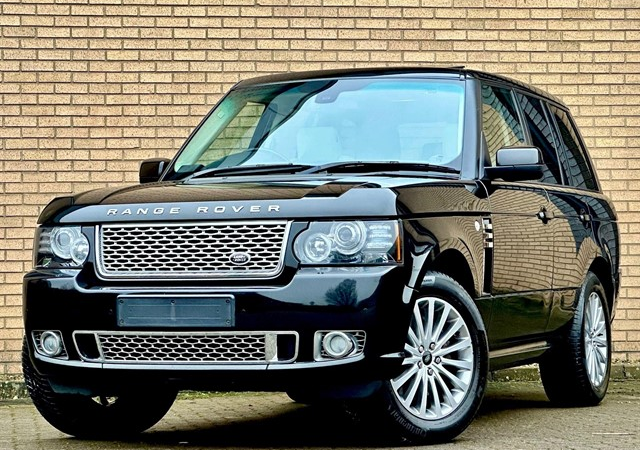
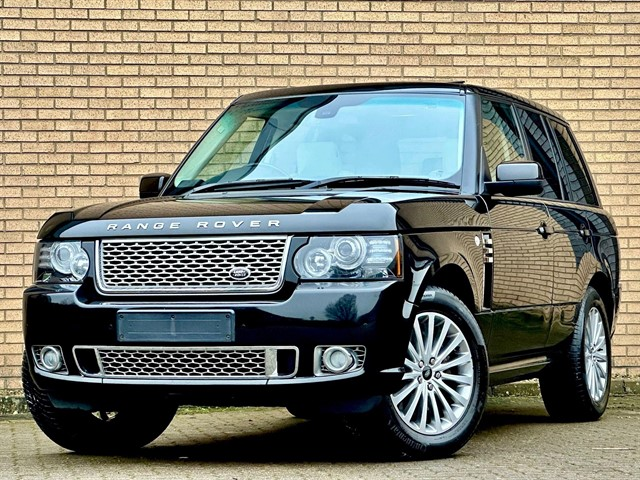
There are vehicles that get things mostly right. And then there are vehicles that get almost everything right but fall short in a few specific areas. The 2003–2005 Range Rover L322 TD6 is firmly in the second category. The chassis is brilliant. The ride quality is exceptional. The character is unlike anything else in its class. But it came from the factory with four problems that compound on each other over time and turn what should be an exceptional ownership experience into a frustrating one.
The good news is that every single one of those problems is fixable. And once you fix them properly, you end up with something genuinely hard to beat.
What the L322 Actually Is
Before getting into the problems, it’s worth understanding what you’re actually dealing with. The L322 is not a truck dressed up to feel like a luxury SUV. It’s a proper luxury vehicle with genuine off-road capability baked in from the ground up. Air suspension, full-time four-wheel drive, a brilliant platform, and a cabin that still holds up against modern competitors in terms of feel and refinement.
The platform came out of a joint venture between Land Rover and BMW during the Ford ownership era, which is how it ended up with the M57 straight-six diesel. That partnership produced something unusual. A body-on-frame SUV that drives more like a large German saloon than a truck. The steering is slow but confidence-inspiring. The suspension breathes over rough pavement instead of crashing into it. At highway speed the truck settles into this effortless long-distance rhythm that most modern SUVs still struggle to match.
That chassis is the whole reason this build makes sense. Everything else is fixable. The chassis is not.
Problem One: Not Enough Power
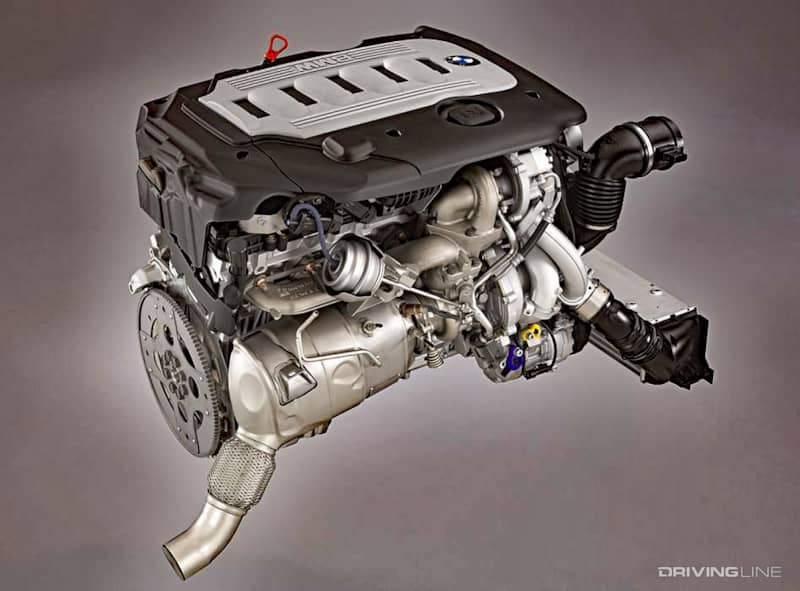
The factory TD6 made roughly 174 hp and 390 Nm of torque in a vehicle weighing close to 2,500 kg. That combination is smooth and refined and durable, but the engine just doesn’t have enough authority for the size of the vehicle it’s powering. Merging onto a highway, climbing a hill with a trailer, overtaking at speed the truck feels like it’s always working harder than it should.
You drive it and you constantly feel like it wants another 100 horsepower and 200 Nm of torque. The chassis is asking for more and the engine can’t deliver it.
What makes this build genuinely viable is that the BMW M57 is not a fragile engine being pushed beyond its limits. It’s a cast iron block diesel with an extremely strong bottom end, excellent oiling, and a track record across Europe that’s hard to argue with. BMW 335d builds, X5 3.0d builds, and heavy European tow vehicles running 300 to 350 horsepower and 600 to 700 Nm are extremely common, regularly accumulating 400,000 to 500,000 km without major internal failures. The engine was massively understressed from the factory. Land Rover and BMW left a huge amount of capability on the table.
The key phrase is tuned properly. Most diesel reliability problems come from excessive heat, oversized turbos, and uncontrolled torque delivery. A build that keeps EGTs manageable, uses a conservatively sized hybrid turbo, and limits torque delivery in the lower gears avoids all of that. A lightly stressed diesel making easy torque is often more reliable long-term than a stock engine constantly running near full load just to move a heavy vehicle.
At 300 to 320 horsepower and 600 to 700 Nm the truck finally feels like its chassis, suspension, brakes, and luxury character all match the drivetrain. Highway passing is effortless. Towing feels relaxed. Hill climbs happen without drama. It doesn’t become a different vehicle. It becomes a complete one.
Problem Two: The Transmission
The GM 5L40E that came in the L322 was never a great transmission and at 600 to 700 Nm it becomes a genuine liability. It was designed for naturally aspirated applications making a fraction of this torque. Pushing a tuned M57 through a stock 5L40E is a matter of when, not if. Even with a full rebuild and a shift kit, you’re managing a weakness rather than solving it.
The right answer is the ZF 8HP. This is the transmission that should have been in this truck to begin with. The ZF 8HP is one of the most highly regarded automatic transmissions ever built. It’s used in BMW M cars, Aston Martins, Rolls-Royces, and Bentleys. It’s rated for well over 700 Nm in its heavier variants. It’s smoother, faster shifting, more fuel efficient, and built for exactly the kind of long-distance high-torque duty cycle this build demands.
The swap is not plug and play but it’s well-documented. The 8HP bolt pattern is compatible with the M57, the transfer case can be adapted, and the ZF 8HP can be controlled through a standalone TCU or integrated into the existing electronics with the right setup. The result is a transmission that’s not just surviving the torque but thriving on it. Fuel economy improves noticeably because the 8HP always finds the right gear. Shifts are almost imperceptible under normal driving. Under hard acceleration it’s sharp and decisive without being aggressive.
This is the single most important mechanical upgrade in the build outside of the engine itself. The 5L40E is the weak link. The 8HP removes it entirely.
Problem Three: The Electrical System
This is the section that most L322 owners either ignore until it becomes a crisis or throw parts at without actually understanding what’s wrong. The L322 has a reputation for electrical gremlins that is partly deserved and partly misunderstood.
The actual problem is not that the electronics are poorly designed. The problem is that the wiring harness, chassis grounds, and modules all degrade over time in ways that interact with each other badly. A corroded ground causes a voltage drop that triggers a module fault. The module fault gets cleared but comes back because the ground hasn’t been fixed. The owner replaces the module. Same fault returns. This cycle repeats because nobody addressed the root cause.
The fix is a systematic reset of the entire electrical system, not just the obvious symptoms. Every ground strap cleaned and replaced. Every connector in the engine bay and underbody disassembled, cleaned, treated with dielectric grease, and resealed. The harness unwrapped and inspected physically, not just scanned for codes. All four major modules replaced proactively and coded to the VIN with JLR SDD or Autologic, not a generic OBD tool.
Done properly, this transforms the ownership experience. The phantom faults stop because the conditions that created them no longer exist. The modules work correctly because they’re receiving clean consistent voltage. The vehicle becomes the reliable daily driver it should have always been.
Problem Four: The Air Suspension
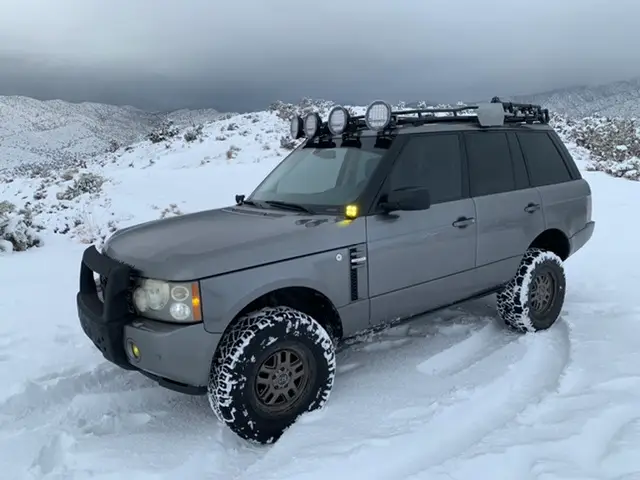
The L322 air suspension has a reputation that it doesn’t entirely deserve. Yes, it fails. Yes, it fails often on neglected examples. But the system fails because of age and lack of maintenance, not because of a fundamental design flaw. A properly rebuilt air setup on an L322 should run 150,000 km or more without needing attention.
The reason it’s worth keeping rather than converting to coilovers is that the air suspension is a significant part of what makes the L322 feel the way it does. The ride quality on a properly functioning air system is in a completely different league from any coilover setup. The vehicle is self-levelling under load, which matters for towing. It raises for off-road and lowers for highway. Converting to coilovers solves the reliability problem by deleting the feature entirely. A proper rebuild solves the reliability problem while keeping everything that makes the truck special.
The rebuild covers everything. All four air struts replaced with Arnott or equivalent OEM-quality units. The compressor upgraded to an AMK unit, which is a meaningful improvement over the OEM Wabco and much better than any pattern part replacement. New valve block. New ride height sensors on all four corners. Air lines inspected and replaced where cracked or perished. At the end of this the system is essentially new and should stay that way for a long time.
The Full Build
With all four problem areas addressed, what remains is a methodical reset of every remaining wear system on the vehicle. The philosophy is simple: fix everything once properly, then leave it alone.
Budget
| Item | Budget (CAD) |
|---|---|
| Vehicle purchase (Europe) | ~$14,000–$18,000 |
| Shipping UK to Halifax | $2,500–$4,000 |
| Import duties, RIV, compliance, registration | $3,000–$5,000 |
| Total vehicle landed | ~$20,000–$27,000 |
| Full rebuild budget | $30,000–$35,000 |
| Contingency (15%) | $4,500–$5,000 |
| Total project estimate | ~$60,000–$70,000 CAD |
The 2005 L322 TD6 qualifies under the 15-year classic import exemption. Full compliance is not required.
Recommended Build Order
| Phase | Scope | Priority |
|---|---|---|
| Phase 1 | Engine rebuild, cooling system, fuel system, dyno tune | Immediate |
| Phase 2 | 8HP transmission swap, transfer case, driveshafts, fluid baseline | After Phase 1 |
| Phase 3 | Full suspension reset, brakes | After Phase 2 |
| Phase 4 | Complete electrical overhaul all modules, harness, grounds, cluster | Concurrent with Phase 3 |
| Phase 5 | HVAC, final fluids, tires, road test | Final |
Performance Targets
| Metric | Target |
|---|---|
| Peak power | ~300–320 hp |
| Peak torque | 600–700 Nm (gear-limited) |
| 0–100 km/h | ~7–8 seconds |
| Fuel economy highway | 9–11 L/100 km |
| Fuel economy mixed | 11–13 L/100 km |
| Engine lifespan | 300,000–500,000 km |
| Suspension service interval | 5–10 years trouble-free |
| Electrical reliability | Minimal issues after full reset |
The Bottom Line
The L322 TD6 is one of the most capable and characterful SUV platforms ever built. The chassis is brilliant, the ride quality is exceptional, the off-road capability is genuine, and the character is unlike anything else. It came from the factory with four problems: not enough power, a weak transmission, an aging electrical system, and air suspension components that degrade over time.
This build fixes all four properly.
What you end up with is a 300,000 km daily driver that tows confidently, handles Canadian winters without drama, cruises highways effortlessly, and still feels like a proper Range Rover every time you climb in. Not a modified truck trying to be something it isn’t. Just the vehicle Land Rover should have built in the first place.