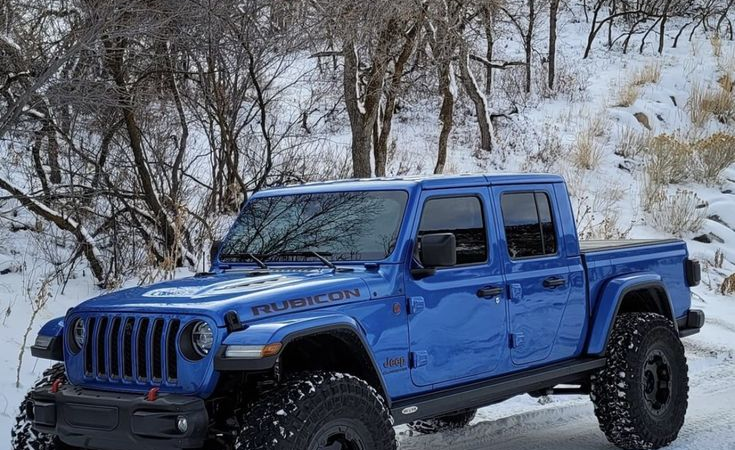
Daily Driver. Snow Truck. Tow Rig. Weekend Off-Roader.
Now that we’ve covered how the Gladiator was actually engineered, it’s time to talk about how to build one properly. And properly doesn’t mean biggest.
Most Gladiator builds follow the same playbook. Massive lift, 37-inch mud terrains, deep-offset wheels, heavy steel bumpers, rooftop tent, and a few thousand pounds of stuff bolted to a truck that was already heavily built from the factory. The result looks great in photos. On the road it’s a different story. Vague steering, harsh ride, terrible in snow, and genuinely exhausting on a long highway drive.
The smarter approach is building with the platform instead of against it. Jeep engineers already solved a lot of these problems before the truck hit the lot. The goal here is to finish what they started.
Start With the Right Truck
The best base for this build is the Gladiator Sport with the 6-speed manual.
It’s the lightest, simplest version of the truck. No unnecessary luxury weight, fewer electronics, less trim complexity. That matters because weight affects everything on a Gladiator. Braking, ride quality, steering feel, fuel economy, suspension behaviour. A lighter truck just drives better in every measurable way.
The manual transmission is worth talking about too. Modern midsize trucks are getting increasingly filtered and isolated. The manual Gladiator still feels like something. You feel driveline movement, clutch engagement, axle loading, and terrain feedback through your hands and feet. For a truck built around mechanical simplicity and real-world capability, that connection fits perfectly. This build is about preserving that character, not burying it.
| Spec | Choice |
|---|---|
| Model | Gladiator Sport |
| Engine | 3.6L Pentastar V6 |
| Transmission | 6-Speed Manual |
Tire Size: Bigger Is Not Always Better
The Gladiator community has largely convinced itself that anything under 37 inches is basically stock. That’s wrong, and it leads to a lot of trucks that ride and handle worse than they should.
Oversized tires increase unsprung weight, worsen braking, overload the steering components, reduce ride quality, and are genuinely worse in snow. On a solid-axle truck with recirculating-ball steering, those effects are amplified compared to something with independent front suspension.
The sweet spot for this build is 285/75R17, which works out to about 33.8 inches tall. That’s enough to improve clearance and maintain real off-road capability, while staying light enough for proper steering feel, narrow enough to actually work in winter, and manageable for the Pentastar and manual drivetrain combination.
Why Narrower Tires Are Better in Snow
This is one of the most persistent misconceptions in truck culture. Wider is not better in winter. A narrower tire concentrates the vehicle’s weight over a smaller contact patch, which helps it cut through snow and reach the firmer surface underneath. That’s why rally cars, Scandinavian expedition rigs, and forestry trucks run relatively narrow tires.
Wide mud terrains float on top of snow, follow ruts, hydroplane in slush, and feel vague. On a Gladiator specifically, heavier and wider tires amplify the steering kickback and front suspension harshness that the truck already deals with from the solid axle setup. A lot of downsides for not much real-world gain.
The Tire: Nokian Outpost nAT

After looking at independent winter testing data, the Nokian Outpost nAT stands out as the best overall fit for this build. Not because it’s the most aggressive all-terrain tire on the market, but because it’s the most balanced.
Independent testing from Tire Reviews showed the Outpost nAT delivering some of the strongest winter performance numbers among modern all-terrain tires:
| Test | Result |
|---|---|
| Snow Braking | 21.79 metres |
| Ice Braking | 11.33 metres |
| Overall Winter Score | 97.1% |
Those are exceptional results for a year-round all-terrain tire. The Nokian consistently performed well in snow braking, slush behaviour, ice traction, and winter handling.
The Outpost also matches the Gladiator’s personality well. Quiet on the highway, stable in poor weather, predictable at speed, but still highly capable off-road. Compared to many heavier mud terrains, it rides smoother, stops shorter, feels more precise, and places less stress on the Gladiator’s steering and suspension systems.
Tire Comparison
Here is how the Nokian stacks up against the most common all-terrain alternatives:
| Category | Nokian Outpost nAT | BFGoodrich KO3 | Falken Wildpeak A/T4W | Cooper AT3 4S |
|---|---|---|---|---|
| Price (approx) | $308 | $517 | $292 | $271 |
| Overall Winter Score | 97.1% | 94.6% | 89.7% | Strong* |
| Snow Braking | 21.79 m | 22.63 m | 23.57 m | Good |
| Ice Braking | 11.33 m | 13.14 m | 12.89 m | Good |
| Snow Handling | Excellent | Excellent | Average | Good |
| Highway Noise | Low | Moderate | Moderate-High | Low |
| Tire Weight | Moderate | Heavy | Very Heavy | Moderate |
| Steering Feel | Precise | Slightly Heavy | Heavier/Slower | Road-Oriented |
| Off-Road Aggression | Moderate | High | Very High | Moderate |
| Best Trait | Overall balance | Durability & traction | Off-road grip | Comfort |
Suspension: The Most Important Part of the Build
Most Gladiator builds focus on lift height. That’s usually the wrong priority.
The single biggest factor affecting how a Gladiator feels is damping quality. That determines ride comfort, highway stability, steering behaviour, towing confidence, and rough-road control. The Gladiator’s solid axles, recirculating-ball steering, and heavier unsprung weight make it extremely sensitive to suspension tuning. Poorly tuned suspension turns the truck harsh, twitchy, and unpredictable. Good damping completely transforms it.
The Choice: Falcon SP2 3.3 Fast Adjust Piggyback Shocks

The Falcon SP2 3.3 system is arguably the ideal suspension setup for a Gladiator expected to do everything well. Not because it’s the most extreme off-road system available, but because it solves the exact problems a daily-driven Gladiator actually has.
The Falcon system was specifically engineered around Jeep solid-axle dynamics and mixed-use driving conditions. It uses adjustable damping, piggyback reservoirs, increased oil capacity, and Jeep-specific tuning.
The piggyback reservoirs increase oil volume and cooling capacity, reducing shock fade during towing, rough-road driving, washboard surfaces, and long-distance travel.
The adjustable damping is where the system really separates itself. In softer settings the Falcons dramatically improve small-bump compliance, winter-road comfort, and tire contact on rough pavement. In firmer settings they improve towing stability, body control, and highway composure.
Most aftermarket suspension systems force a compromise: either soft and floaty, or firm and harsh. The Falcons manage to stay controlled without punishing the driver.
Why Keeping the Truck Low Matters
This build intentionally keeps the Gladiator at roughly stock ride height. That preserves factory steering geometry, a lower centre of gravity, braking stability, towing manners, and emergency handling performance.
A lot of lifted Gladiators become less stable, more vague, and harder to control on slippery roads. Keeping the truck lower also improves aerodynamics, driveline angles, and suspension behaviour. Combined with the Falcons, the result is a Gladiator that feels planted and composed instead of top-heavy and nervous.
Wheels: Don’t Ruin the Geometry
Aggressive wheel offsets are one of the fastest ways to make a Gladiator drive worse. Deep-offset wheels increase scrub radius, worsen steering wander, amplify bump steer, and overload wheel bearings. The Gladiator’s steering system is especially sensitive to offset changes.
The ideal setup is simple: lightweight 17×8.5 wheels at near-factory offset with moderate tire weight. That preserves steering precision, suspension geometry, and ride quality. The truck feels calmer, smoother, and more stable at highway speed.
Towing and Daily Driving
One of the biggest advantages of this build is that it still behaves properly as a truck. A lot of heavily modified Gladiators tow poorly because oversized tires, excessive lift, and added weight all reduce stability.
This build avoids those compromises entirely. The combination of moderate tire size, quality damping, and factory-friendly geometry creates a truck that feels composed under load. The Falcons help significantly by controlling rear suspension movement, body oscillation, and highway instability while towing.
The result is a Gladiator that remains comfortable commuting during the week but still feels confident towing trailers or heading into rough terrain on weekends.
The Final Build
| Category | Choice |
|---|---|
| Base Truck | Jeep Gladiator Sport |
| Engine | 3.6L Pentastar V6 |
| Transmission | 6-Speed Manual |
| Tires | 285/75R17 Nokian Outpost nAT |
| Shocks | Falcon SP2 3.3 Fast Adjust Piggyback |
| Wheels | 17×8.5 Lightweight, Near-Stock Offset |
| Ride Height | Stock |
Optional Upgrades
- 410 gears
- Hidden winch
- Lightweight skid protection
- Onboard air
The Result
This build wouldn’t be the tallest Gladiator in a parking lot. It wouldn’t have the biggest tires or the most aggressive stance.
What it would have is balance. It would ride smoothly, steer properly, tow confidently, handle snow exceptionally well, remain reliable, and still go places most trucks never could.
Most importantly, it would still feel engineered. Like the truck and the modifications were designed to work together instead of fighting each other.
That’s the whole point.